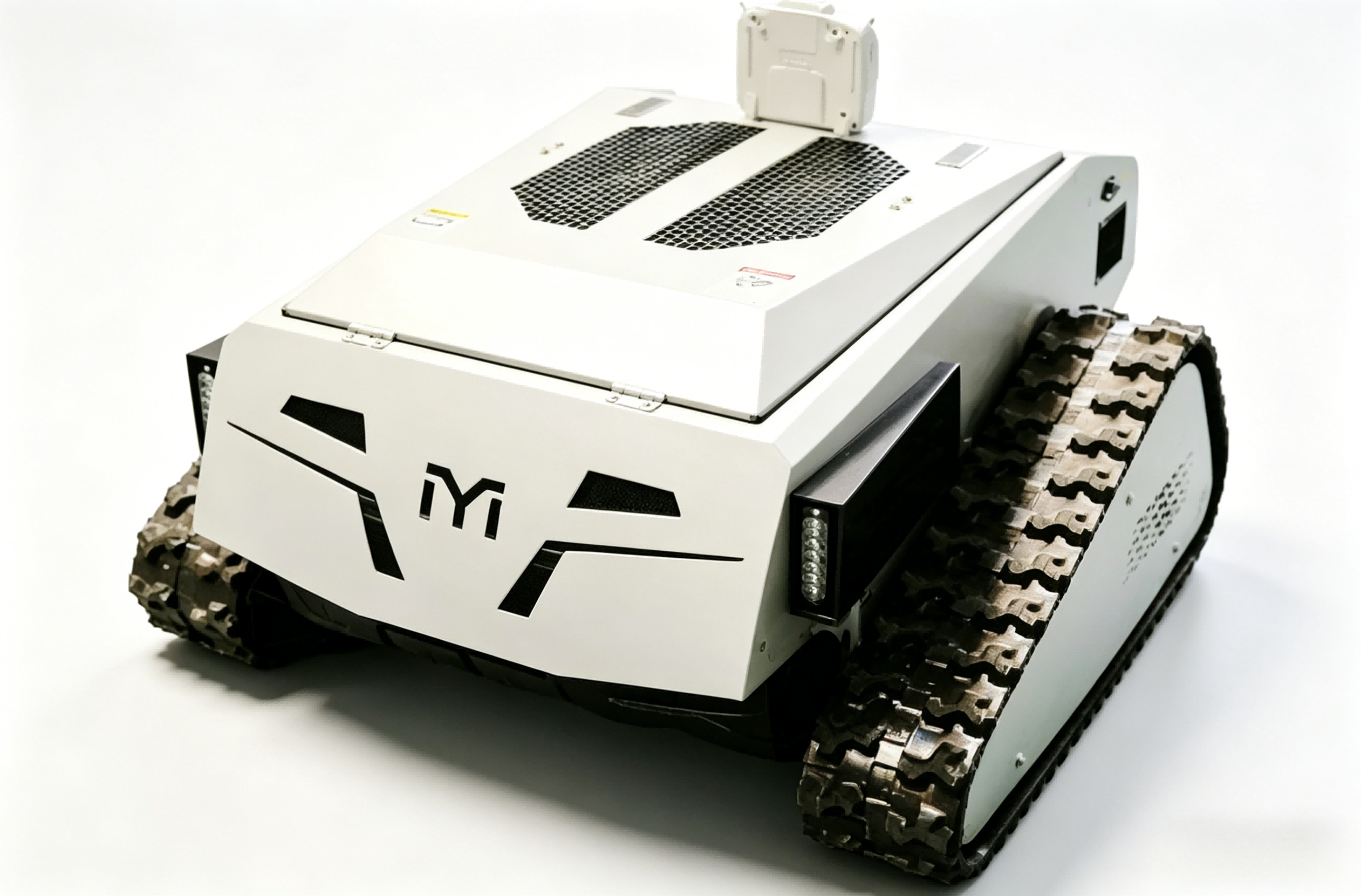
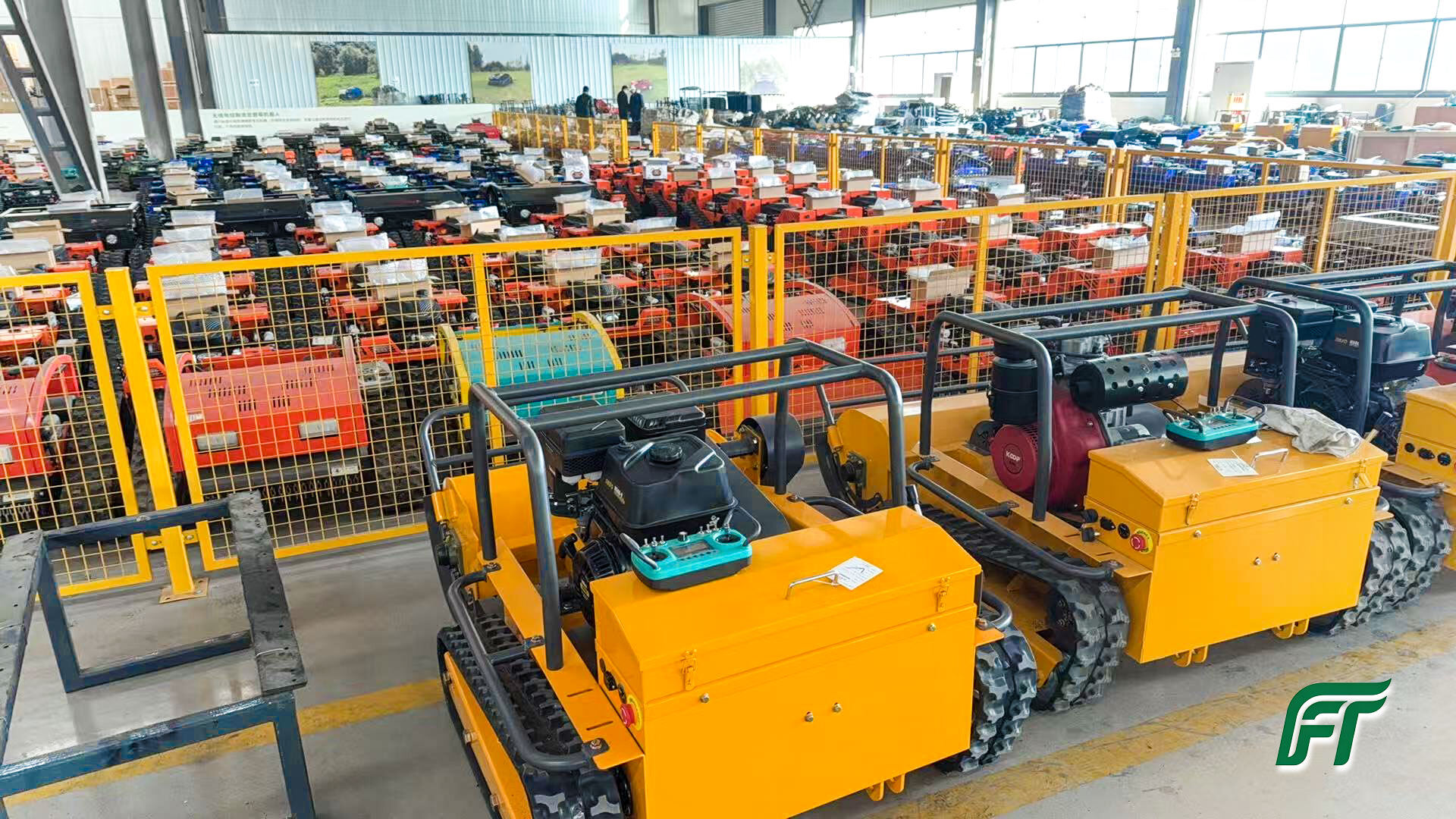
For slopes 30°–45°, you need an RC tracked mower with ≥7.5 HP, rubber tracks ≥15 cm, and 2.4GHz radio control. For slopes above 45° to 65°, flagship machines with 20+ HP and 680m+ remote range are essential. Complete buying guide with model comparisons.
How to Choose a Remote Control Tracked Mower for Steep Slopes (2025 Complete Guide)
Choosing the right remote control tracked mower for steep slopes is critical for safety, efficiency, and long-term value. This comprehensive guide covers everything you need to know about selecting the perfect RC crawler mower for your specific terrain conditions, from moderate 30° inclines to extreme 65° slopes.
Executive Summary: Quick Selection by Slope Angle
For slopes 30°–45°: You need an RC tracked mower with minimum 7.5 HP engine, rubber tracks at least 15 cm wide, and reliable 2.4GHz radio control system. Models like FT-550S and FT-550Y excel in this range.
For slopes 45°–55°: Step up to machines with enhanced track systems featuring high-flange designs for superior lateral grip. The FT-40 Large with its aggressive track pattern handles these challenging grades confidently.
For slopes 55°–65°: Only flagship machines with 20+ HP engines, reinforced chassis, and 680m+ remote control range should be considered. The FT-800D Tank represents the pinnacle of steep-slope mowing technology.
Why Tracked Mowers Dominate on Steep Terrain
The physics behind tracked versus wheeled mowers becomes dramatically clear on slopes exceeding 30 degrees. Tracks distribute the machine’s weight across a substantially larger surface area compared to wheels.
Consider this comparison: A 250 kg remote control tracked mower exerts approximately 0.13 kg/cm² of ground pressure — roughly one-tenth of what an equivalent wheeled mower produces. This dramatic difference translates directly into traction and stability.
On a 35° slope, this means the difference between climbing confidently and sliding uncontrollably. The larger contact patch also minimizes turf damage, preserving the integrity of grass cover even during repeated operations.
Key advantages of tracked systems:
- Superior weight distribution reduces ground compaction
- Enhanced grip on wet, muddy, or loose surfaces
- Better stability on cross-slopes and uneven terrain
- Reduced risk of rollover accidents
- Ability to operate on slopes where wheeled equipment fails
4 Critical Selection Factors for Steep Slope Mowers
1. Slope Angle Rating — Your Primary Safety Parameter
The most crucial specification is the manufacturer’s maximum slope rating. However, smart buyers apply a critical safety margin.
Industry best practice: Maintain at least a 10° buffer between your typical operating slope and the machine’s rated capacity. If your site averages 35°, choose a mower rated for 45°. This accounts for unexpected conditions like wet grass (which reduces traction by approximately 29%), hidden obstacles, or operator error.
| Your Slope Need | Recommended Fengte Model | Key Advantage | Price Range |
|---|---|---|---|
| Up to 45° | FT-550S, FT-550Y | Standard professional grade, excellent value | Entry-mid |
| Up to 55° | FT-40 Large | High-flange tracks prevent lateral slip | Mid-premium |
| Up to 65° | FT-800D Tank | Maximum rated slope, commercial durability | Premium |
Pro tip: Always measure your actual slope angles using a digital inclinometer before purchasing. Visual estimates are notoriously unreliable.
2. Engine Power — Torque Matters More Than Horsepower
While horsepower gets marketing attention, torque delivery determines real-world performance on steep grades. The FT-550Y exemplifies this principle: at 137 kg with 9 HP, it outperforms heavier machines with similar power ratings due to its exceptional torque-to-weight ratio.
Engine type considerations:
- Gasoline engines: Most common, good power-to-weight ratio, widely serviceable
- Diesel engines: Superior low-end torque, better fuel efficiency, longer lifespan
- Electric motors: Zero emissions, instant torque, limited runtime for steep applications
For slopes exceeding 40°, prioritize engines with strong low-RPM torque characteristics. This ensures consistent cutting performance without stalling when encountering thick vegetation.
3. Track System Design — The Difference Between Grip and Slip
Not all track systems perform equally on steep terrain. Three design elements determine effectiveness:
Track width: Wider tracks (minimum 15 cm, ideally 18-20 cm for severe slopes) spread weight more effectively and provide better flotation on soft ground.
Track pattern: Aggressive lug patterns bite into soil for superior climb ability. The FT-40 Large features high-flange tracks that physically prevent lateral slippage — a critical safety feature on cross-slopes.
Track tension: Properly tensioned tracks maintain optimal contact with drive sprockets and idlers. Look for models with easy tension adjustment mechanisms.
Track material: Rubber compounds formulated for outdoor use resist UV degradation, abrasion, and chemical exposure from fertilizers and pesticides.
4. Remote Control Range and Reliability — Your Safety Lifeline
Remote control systems vary dramatically in capability. For small residential orchards under 5,000 m², a 200m range may suffice. Commercial operations demand far more.
Professional-grade requirements:
- Minimum 500m line-of-sight range
- 2.4GHz frequency with automatic channel selection
- Fail-safe return-to-home function
- Low battery alerts on both transmitter and receiver
- Ergonomic controls with precise throttle modulation
The FT-550Y and FT-800D both feature 680m control range, enabling operation across large commercial sites while maintaining visual contact and safe positioning.
RC Tracked Mowers vs Robotic Mowers — Understanding the Difference
Confusion between remote control tracked mowers and autonomous robotic mowers is common. They serve entirely different market segments.
RC Tracked Mowers:
- Operator controls every movement in real-time
- Capable of 45°–65° slopes
- Handles thick, overgrown vegetation
- Commercial and industrial applications
- Requires skilled operator
Robotic Mowers:
- Pre-programmed autonomous operation
- Maximum slope capacity around 19° (35% grade)
- Requires regularly maintained lawn
- Residential applications only
- Set-and-forget convenience
Rule of thumb: If your slope exceeds 20°, you need an RC tracked mower, not a robotic unit.
Common Mistakes to Avoid When Buying
Mistake #1: Choosing by price alone
An underspecified mower costs far more in the long run through premature wear, frequent repairs, and eventual replacement. Buy for your actual conditions, not your budget comfort zone.
Mistake #2: Ignoring after-sales support
Steep slope mowers operate in demanding conditions. Ensure your supplier provides responsive technical support, readily available spare parts, and clear maintenance documentation.
Mistake #3: Overlooking transport requirements
Consider how you’ll transport the mower to job sites. Larger machines may require trailers with ramps. Factor transport costs into your total investment.
Mistake #4: Skipping operator training
Even experienced equipment operators need specific training for steep slope RC mowers. Budget time for proper training to maximize safety and productivity.
Certification and Compliance — What to Look For
All legitimate Fengte models carry essential certifications:
- CE marking (2006/42/EC): EU Machinery Directive compliance
- GS certification: German safety standard verification
- ISO 9001: Quality management system certification
For North American markets, select models equipped with Kohler engines meeting CARB/EPA emissions standards. EU5 compliance ensures future-proof operation in European markets.
Maintenance Considerations for Long-Term Reliability
Steep slope mowers demand disciplined maintenance schedules:
Daily checks: Track tension, fluid levels, control system function, blade condition
Weekly service: Air filter cleaning, spark plug inspection, track wear assessment
Seasonal overhaul: Complete lubrication, belt replacement, gearbox oil change, comprehensive safety inspection
Following manufacturer maintenance schedules extends equipment life by 40-60% and maintains resale value.
Making Your Final Decision
Selecting the right remote control tracked mower requires honest assessment of your operating conditions, budget constraints, and long-term business goals. Start with your slope angles, add appropriate safety margins, then match specifications to your specific needs.
Remember: The cheapest option often becomes the most expensive through downtime, repairs, and premature replacement. Invest in quality, prioritize safety, and choose a supplier committed to your success.
Request a Quote · View All Products · Download Product Catalog